The history and evolution of Ghana's flagship social protection cash transfer programme since 2008.
The Livelihood Empowerment Against Poverty (LEAP) Programme was introduced by the Government of Ghana in 2008 as a national social protection intervention to support extremely poor and vulnerable households. At inception, the programme covered 1,654 households in 21 districts. Through sustained scale-up and policy commitment, LEAP expanded significantly to reach about 350,000 households by 2026, covering all Metropolitan, Municipal and District Assemblies (MMDAs) nationwide.
LEAP provides bi-monthly cash grants and free National Health Insurance coverage to extremely poor and vulnerable households, with the goal of reducing extreme poverty and promoting human capital development through access to complementary social services.
The programme is managed by the LEAP Management Secretariat (LMS) under the Ministry of Gender, Children and Social Protection led by Dr. Agnes Naa Momo Lartey (MP), Minister, and Marian Wia. Kpakpah (Ph.D), Chief Director with support from the World Bank, UNICEF, and the UK Government's FCDO.
Under GPRS II framework, 2007–2008
Gender, Children & Social Protection
Reduce extreme poverty & promote human capital
Bi-monthly cash grants + free NHIS coverage
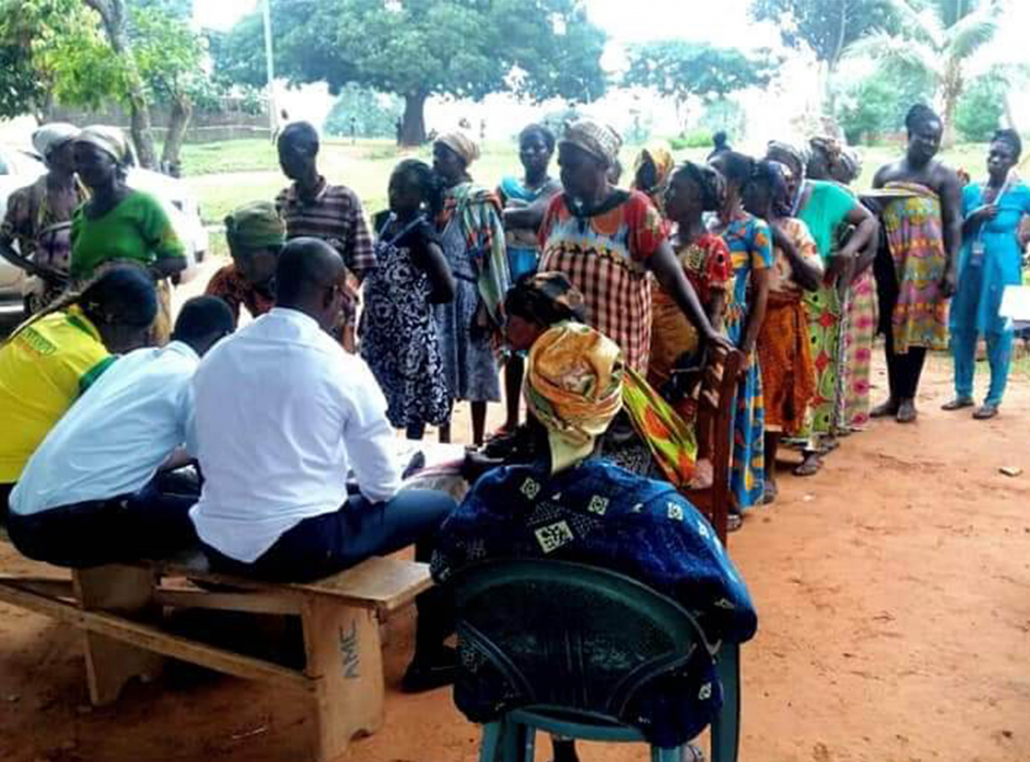
To reduce extreme poverty and promote human capital development among vulnerable households through the provision of cash transfers and access to complementary social services.
LEAP stands as a cornerstone of Ghana's drive to create an inclusive, equitable and responsive social protection system. As the nation evolves, with shifting demographics, changing household needs and advancements in data systems, LEAP must reassess beneficiaries to ensure its support reaches those who need it most.
From a small pilot to a nationwide programme, trace LEAP's journey of growth and impact.
LEAP is designed as part of Ghana's Growth and Poverty Reduction Strategy II (GPRS II), establishing the framework for a national cash transfer programme.
LEAP makes its first cash transfer to 1,654 households across 21 pilot districts. Targeted categories include orphans and vulnerable children (OVC), elderly (65+), and severely disabled persons.
LEAP expands to 54 districts. Pregnant women, nursing mothers, and persons with severe disability without productive capacity are added as eligible categories.
Emergency LEAP is established to provide rapid support to households affected by floods and droughts, demonstrating the programme's responsiveness to natural disasters.
Grant amounts are significantly increased: from GH₵16–30 to GH₵48–90 per household, reflecting government commitment to meaningful poverty reduction.
LEAP transitions to electronic payment systems through AYA Technologies, MTN Mobile Money, and the Ghana Interbank Payment and Settlement Systems (GhIPSS), improving security and efficiency.
Cabinet approval establishes the LEAP Management Secretariat as a separate, dedicated entity. Payment rates are increased to current levels: GH₵64–106. Biometric e-zwich payments rolled out nationwide.
LEAP celebrates a historic milestone, the 100th payment cycle, reaching all 216 MMDAs and disbursing GH₵320–530 per household to over 350,000 beneficiary households.
Using the Ghana National Household Registry (GNHR), Government identifies 400,000 newly eligible extremely poor households for enrolment. A transitional support system is introduced for graduating households, including livelihood programmes, financial literacy workshops, and Village Savings and Loan Associations.
Independent evaluations confirm LEAP's significant and measurable impact on beneficiary households.
12% increase in school enrollment, reduced grade repetition, and improved attendance among school-age children in beneficiary households.
65% of beneficiaries reported improved food security, with households able to maintain more regular meals and dietary diversity.
62% of beneficiaries used grants to purchase fertilizers, directly improving agricultural productivity and food production.
63% invested in economic activities such as small businesses, trading, and farming creating pathways out of poverty.
NHIS enrollment requirement ensures all beneficiary households have access to the National Health Insurance Scheme.
56% female beneficiaries and 62% female-headed households receiving LEAP support, advancing gender equity goals.
A nationwide reassessment ensures LEAP's support reaches those who truly need it most, while enabling capable households to graduate with dignity.
The reassessment exercise is undertaken to:
Data Collection
Data Processing & Analysis
Following a nationwide reassessment using the Ghana National Household Registry (GNHR), Government has identified:
This ensures that support is delivered to those most in need, while also enabling capable households to transition out of the programme with dignity.
A significant number of households have experienced welfare improvements and are ready to transition. Government is introducing a carefully designed transitional support system ensuring transitions are managed smoothly, respectfully and with the necessary backing.
Beneficiaries will have access to productive inclusion initiatives such as:
Government remains committed to enhancing the Programme through improved delivery systems, stronger accountability, and linkages to complementary services that support long-term well-being. The reassessment further strengthens transparency, accountability and efficient resource use, while supporting structured and dignified transitions for households moving out of the programme.